
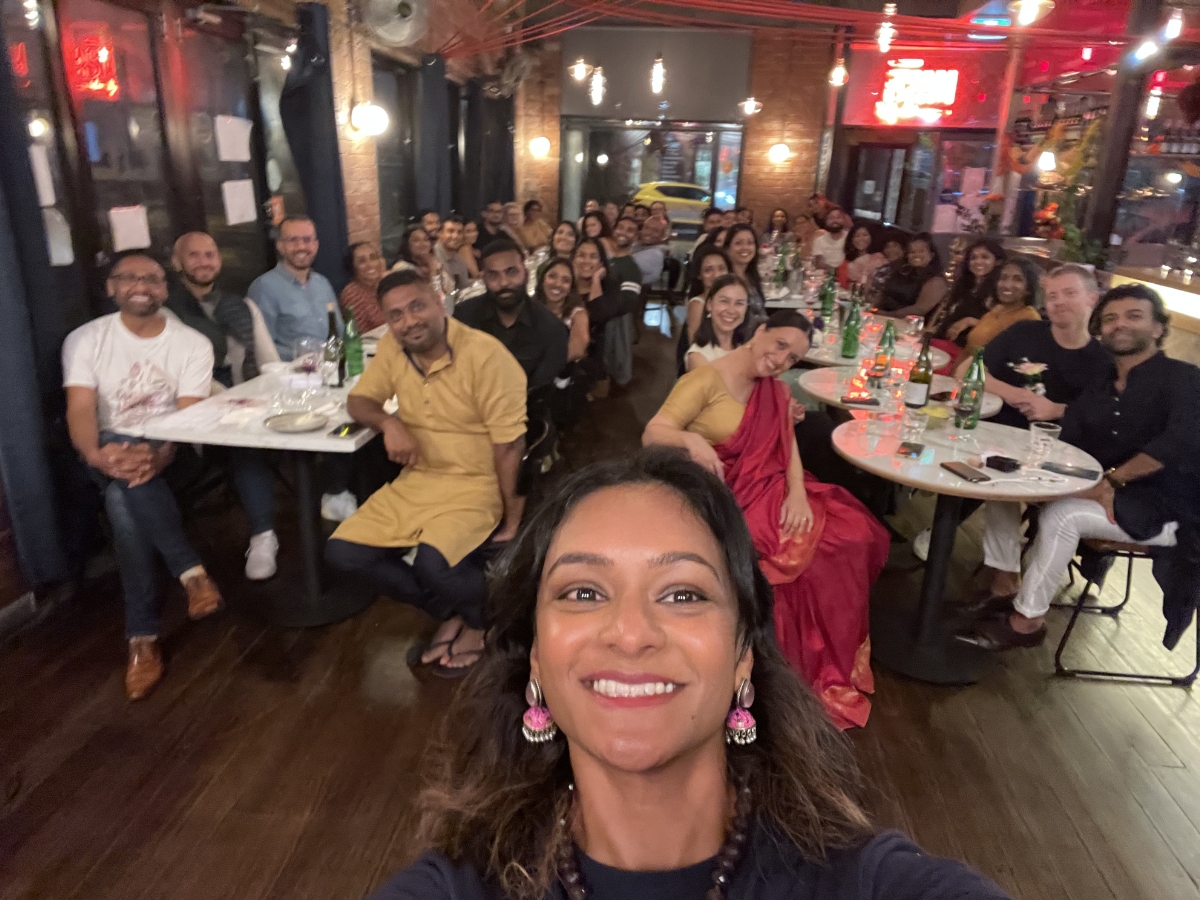
A few years ago, I was volunteering in the family violence sector. I was there to help women and children find a way out of domestically violent households but I ended up finding a very different purpose.
In the environment I was working in, there was a theme around South Asian women returning to their perpetrators and what I found problematic was the people around me misunderstanding their motivations and reasons.
The judgments were swift. That these women didn't love their children enough to leave (and cared more about what their communities thought). That their communities were controlling. That the families keeping them there were the problem, full stop. I understood where it came from. But what I also noticed — and this took time to sit with — is that most of us don't stop to examine how much of our own thinking is shaped by the environments we grew up in. The behaviours we'd never think to question because they've always just been there.
I remember in the early days of writing And What Will People Say?a friend of mine asked me “Hey Kersh, I don't understand — why does it matter that the woman's in-laws live down the road from her husband's parents?”
I really didn't know how to answer this question — wasn't the answer obvious? But it did open my eyes.
We're all products of our social environment. The difference is that some of us are more aware of it than others. And in spaces where the stakes are high, that gap in self-awareness can cause real damage. The judgments I kept hearing were so black and white. And the more I sat with them, the more I felt like I needed to speak out.
Here's what I know about community — my community specifically. My aunties who could barely walk would chase me down the road with jumpers when it was cold. They picked me up from dance classes, made me eat, looked after me when I was sick. My uncles taught me how to make tea, debated politics with me and fixed things around the house. They came to every concert, admired every saree I wore and celebrated my achievements from big to small. From food to arts to just showing up — community, at its best, is a support system. It shapes how we grow, how we see ourselves, how we move through the world and treat other people.
For a lot of South Asian women — especially those who migrated, who don't have family here, who built their lives around the people immediately around them — that community isn't just nice to have. It's everything. A decision to leave isn't just a decision between two people. It affects relationships, reputations, livelihoods, the people who look after your kids. That's not a weakness. That's a different kind of weight entirely.
And the women who stayed for the sake of their children — I'm not here to say that was right or wrong. But the framing of “she stayed, therefore she doesn't care” always felt like it dismissed what those women were actually doing. For many of them, staying was the act of care. Financial stability. Emotional continuity. Keeping something intact for their kids, even at cost to themselves.
None of this is to say nothing needs to change. It does. But there's a difference between acknowledging that something needs to change and deciding that everything about a community is the problem.
The question I kept coming back to was: what if instead of sitting in judgement of these structures, we figured out how to work with them? Our communities have values — around family, loyalty, showing up for each other — that are worth something. What would it look like to use those values as the starting point for change, rather than the thing we're trying to dismantle?
That's where And What Will People Say? came from.
Created alongside artists, psychologists, social workers and community members, the show is a space to talk about this common situation that exists in many families — in a way that's safe, non-judgmental and grounded in the strengths of our communities. Not a lecture. Not a verdict. A conversation — one that meets people where they are.
Because everyone wants it to be better. They just need a way that doesn't require them to condemn everything they come from first.
Written by Kersherka Sivakumaran · BCD Theatre 2026